
Sensory Bin Ideas by Age, and the Craft Buckets We Used Instead
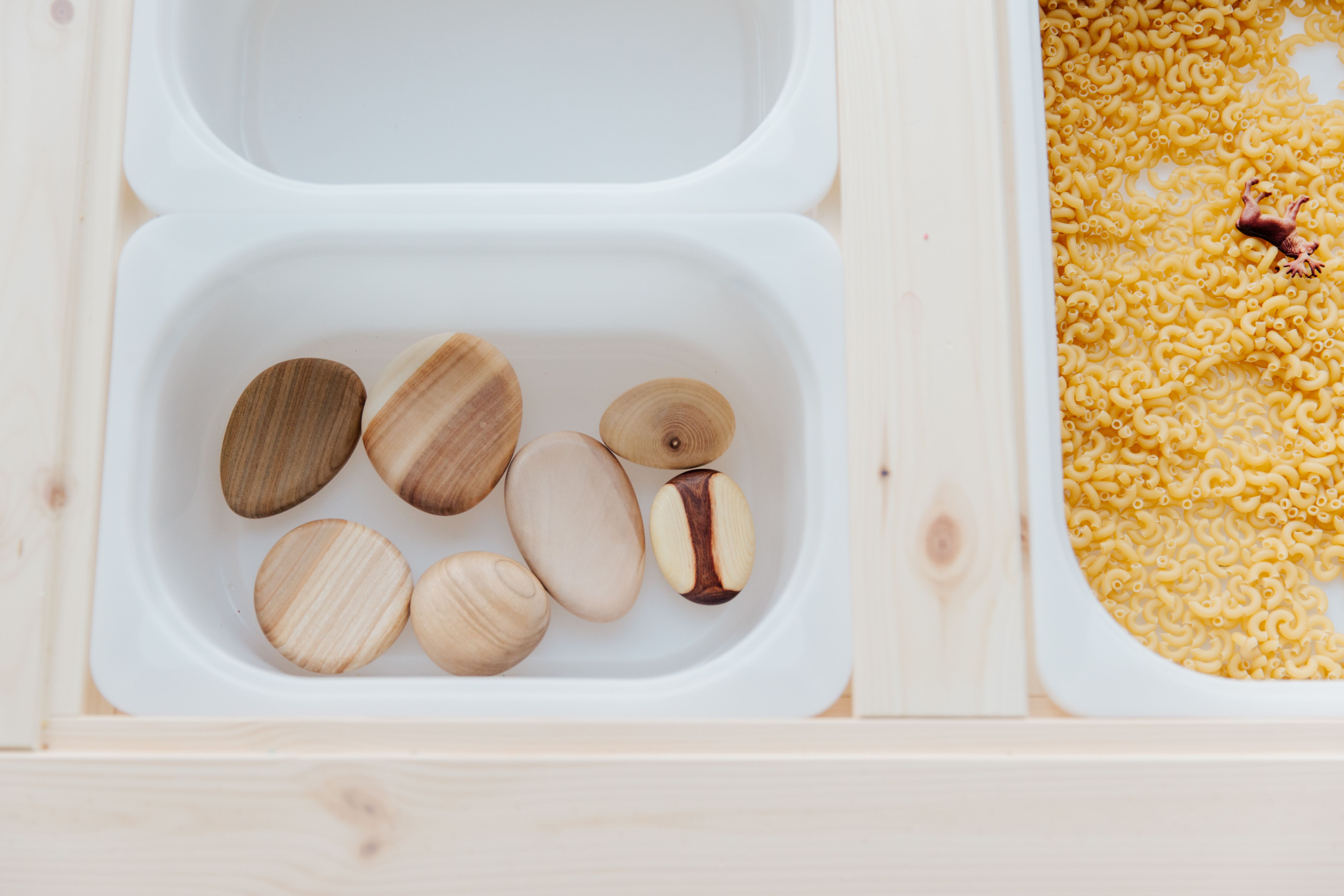
I never had a house built for sensory bins – no craft room, no shelf of matching labeled containers, no space to dedicate a whole bin to one theme for a week and then swap it out. What I actually did was simpler. Different stuff already lived in different bins around the house – Legos in one, costumes in another, a couple for puzzles (the wooden Melissa & Doug ones together, the wooden Thomas the Tank Engine set together), craft pompoms in a mix of sizes and shapes, dried pasta saved for stringing into necklaces, a bin of fidget toys. None of my kids were ever especially into “sensory bins” as their own category of play. What we had were adventures, one bin at a time, depending on whatever experience we were in the mood for that day.
The bins that got the most use weren’t ones I’d set up for sensory play at all. They were my actual craft supplies. I’d let the kids play inside my crafting buckets: swishing their hands through a tub of pompoms, sticking their fingers into a bucket of paint bottles just to feel around. It wasn’t curated. It was just what was already in the house, made available.
If you don’t have the space or the bandwidth for a dedicated sensory bin setup, that’s not a reason to skip it. It’s a reason to use what you’ve already got. The “bin” part matters less than the “different textures, no rules, dig in” part.
If dedicated bins by age are more your style than mine, here’s where to start. Particularly if you don’t already have a house full of toys sorted into ready-made bins the way I did. One safety note that matters more than any specific idea below. Anything small enough to fit through a toilet paper tube is a choking hazard for kids under three, full stop. Water beads in particular are not safe for young kids to have unsupervised. They’re a real choking and swelling hazard if swallowed, so if you use them at all, it’s with a much older kid and close supervision, not as a toddler bin filler. Always supervise sensory play with anything that isn’t food-based.
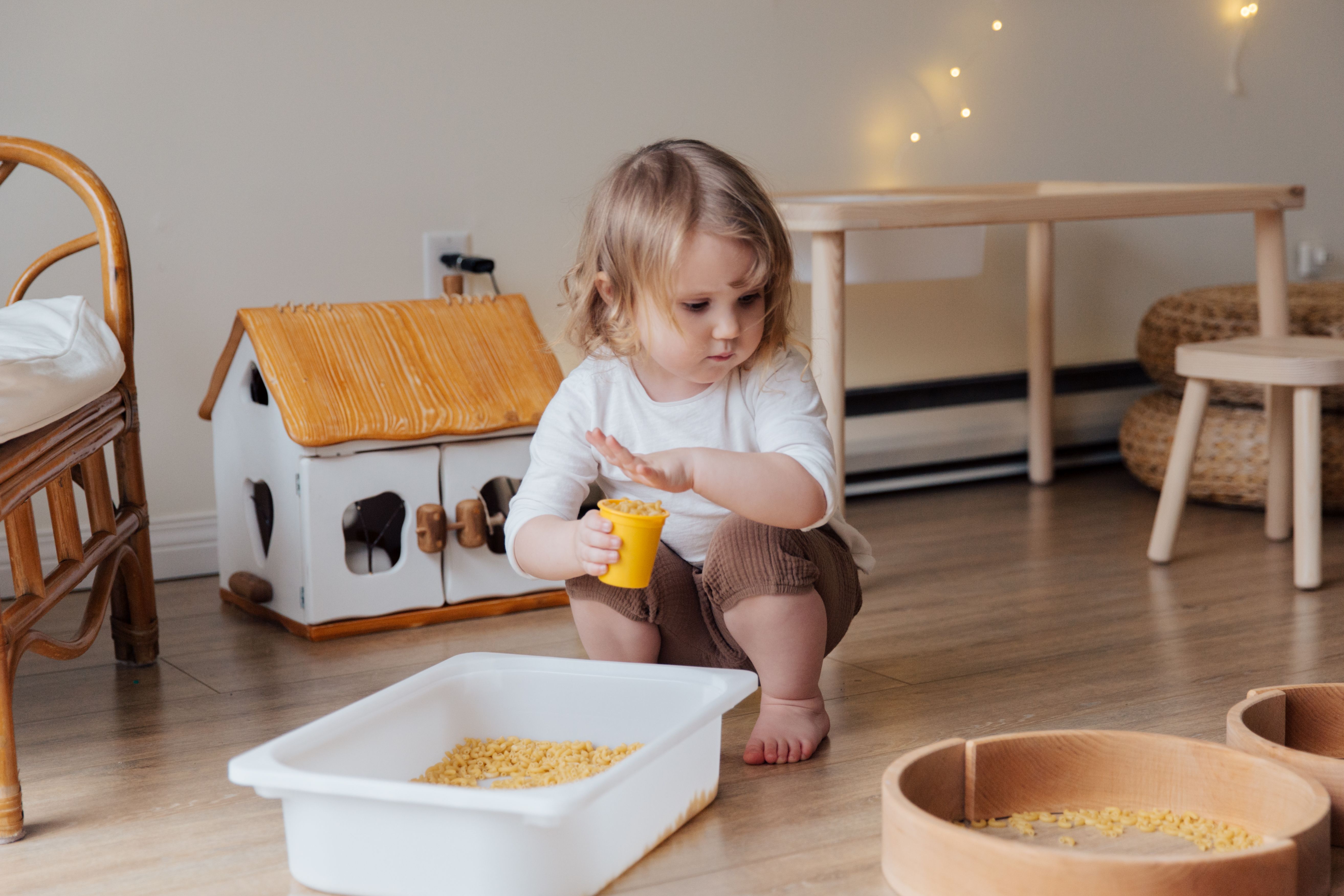
Ages 18 months to 2 (taste-safe fillers)
At this age, assume anything in the bin is going in a mouth at some point, and choose fillers accordingly.
- Cooked and cooled oatmeal “mud” bin with toy spoons and cups
- Dry rice, dyed with food coloring, for pouring and scooping
- Cornmeal “beach” bin with small shovels
- Large dried pasta shapes (like rigatoni) for scooping and transferring
- Shredded coconut “snow” bin
- Applesauce or pudding finger-painting on a tray
- Mashed banana “ice cream” scoop bin
- Large O-shaped cereal for a simple transfer activity
Ages 2 to 3
- Washing baby dolls or plastic animals in a soapy water bin with a washcloth
- Kinetic sand with construction trucks
- Ice rescue bin: freeze small toys into ice cubes, let your toddler “melt” them out with warm water and spoons
- Sponge-squeeze water transfer bin
- A nature texture tray with large pinecones, leaves, and smooth stones
- Shaving cream “cloud” bin on a tray
- Colored rice “ocean” bin with sea animal toys
- Large dried beans for scooping and pouring
Ages 3 to 4
- Color sorting bin with large buttons or pom-poms
- Counting bin with numbered scoops
- Small-world farm or zoo set in dyed rice
- Pumpkin seed harvest bin (a good one for fall)
- Bubble foam sensory bin
- Frozen “dinosaur excavation” bin: toy dinosaurs frozen in a block of ice, given tools to chip them free
- Alphabet letter hunt hidden in rice or beans
- Toy car wash bin with soapy water and sponges
Ages 4 to 5
- Homemade slime or gak with mix-in tools
- Bug hunt bin with a magnifying glass
- Construction site bin with sand, small tools, and vehicles
- Pretend bakery bin with dry ingredients and utensils
- Space bin: black beans, glow-in-the-dark stars, small rockets
- Garden bin with potting soil, seeds, and small pots for pretend planting
A bin doesn’t need to be fancy to work: a plastic storage tub and whatever you already have in the pantry covers most of this list. The goal is independent, hands-busy play, not a Pinterest-perfect setup.
For more independent-play ideas, see quiet time activities for 2-3 year olds, fine motor activities using things you already own, and zero-prep outdoor activities for low-energy days.
Names and identifying details in this post have been changed to protect my kids’ privacy. “Annie Hart” is a pen name for the same reason.