
Fine Motor Activities Using Paint, Puzzles, and an Eyedropper
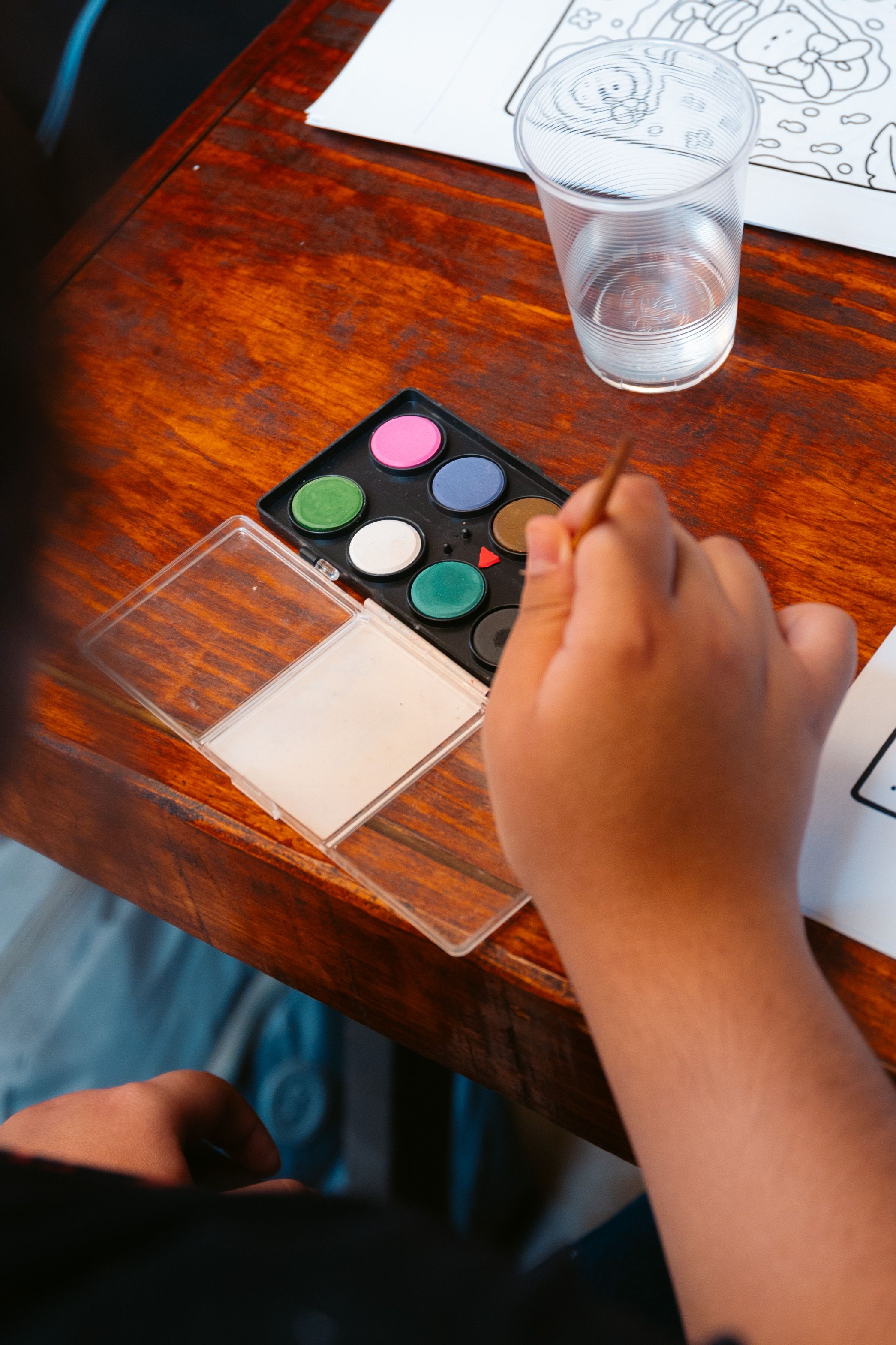
We’ve always been a painting family – wall art, painted rocks, the occasional handprint turned into a keepsake. Puzzles have been well-loved in our house from the beginning, and I think they’ve helped with fine motor skills as much as anything else we’ve done. Someone once told me sidewalk chalk helps build fine motor strength too, and it’s stuck with me every time I hand a kid a piece.
Kid-safe scissors and simple crafts covered a lot of ground on their own. One of the activities that held attention longest, though, was using an eyedropper to drop colored water onto watercolor paper – it’s simple, it’s fun to watch the colors spread and blend, and the grip needed to squeeze the dropper is exactly the kind of small, repetitive motion that builds the skill without it feeling like “practice.”
We never bought a specialty toy or made a trip to a teacher-supply store for any of it. Paint, paper, scissors, chalk, and an eyedropper, all already in the house and used often enough that the skill built itself.
If you want more options beyond paint and puzzles, here’s a bigger list using stuff you likely already have.
With clothespins and tongs
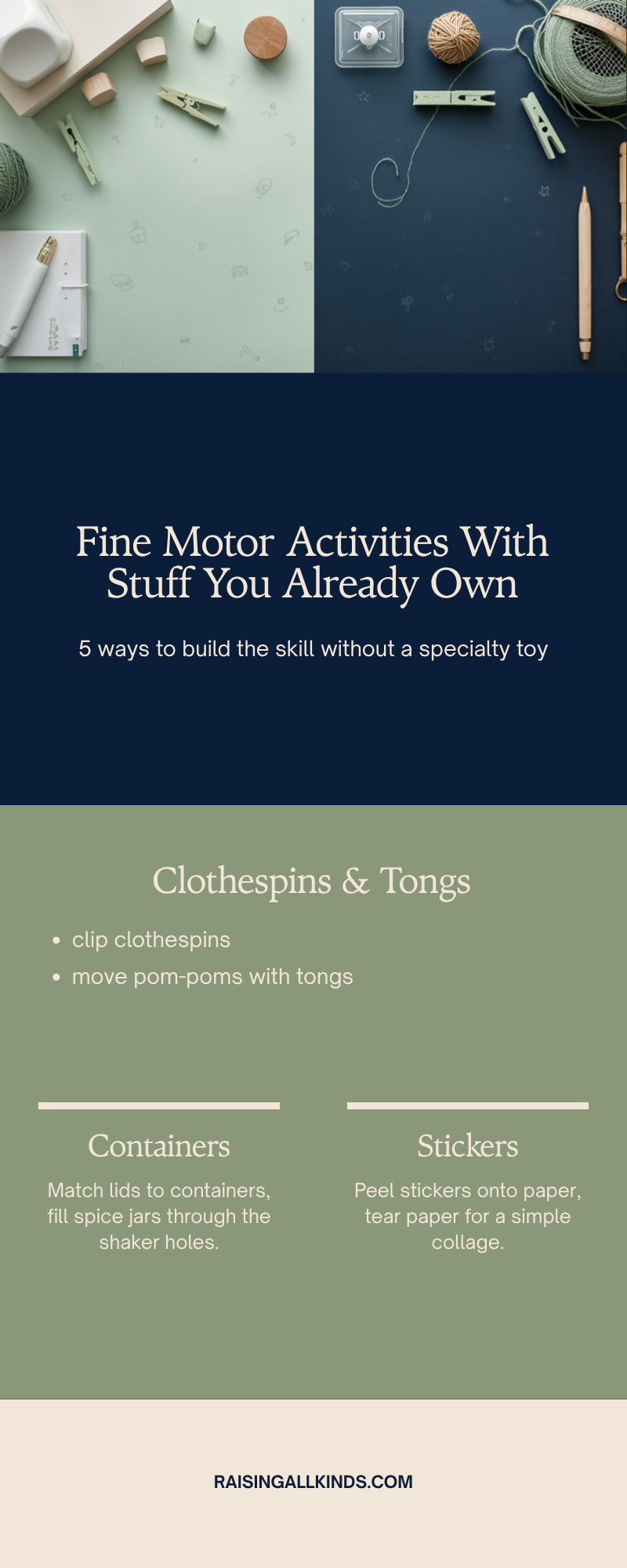
- Clip clothespins around the rim of a bowl or box
- Use tongs to move cotton balls or pom-poms from one bowl to another
- Pin socks to a low string with clothespins, toddler laundry-helper style
With containers and lids
- Match lids to the containers they came from and twist them on
- Fill an empty spice jar with dry pasta through the shaker holes
- Unscrew and re-screw the caps on empty water bottles
With stickers and paper
- Peel stickers off the sheet and stick them onto a piece of paper. The peeling is the real fine motor work
- Tear paper into strips or pieces for a simple collage
- Poke holes in a paper plate with a golf tee or dull pencil, then push pipe cleaners through
With food and kitchen tools
- Peel a hard-boiled egg or a clementine
- Use a melon baller to scoop out a hollowed half of a soft fruit like a cantaloupe
- Press cookie cutters into play dough or a flattened ball of leftover biscuit dough
- Use a small whisk to “stir” water with a drop of food coloring in a bowl
With string and beads
- String dry pasta shapes onto uncooked spaghetti stuck into a ball of play dough
- Loop large buttons or beads onto a shoelace with a taped-stiff end
A quick safety note: anything small enough to be a choking hazard needs direct supervision the whole time, especially with kids under three. Swap in larger pieces (big buttons instead of small beads, rigatoni instead of small beads) if your toddler still puts things in their mouth.
For more independent-play ideas, see the sensory bin list by age, quiet time activities for 2-3 year olds, and screen-free ideas for a rainy day.
Names and identifying details in this post have been changed to protect my kids’ privacy. “Annie Hart” is a pen name for the same reason.