
What Nobody Tells You About Raising a Twice-Exceptional Kid
If I could go back, the thing I’d want to know earlier isn’t a parenting technique. It’s how much my oldest would struggle with confidence and with connecting to his peers – and I wish I’d read about emotional connection and safety far sooner, so I could have taught him those skills with ten years to turn them into habits instead of five, or two. I also figured out executive function and time management around middle school. I wish I’d had that knowledge when he was younger.
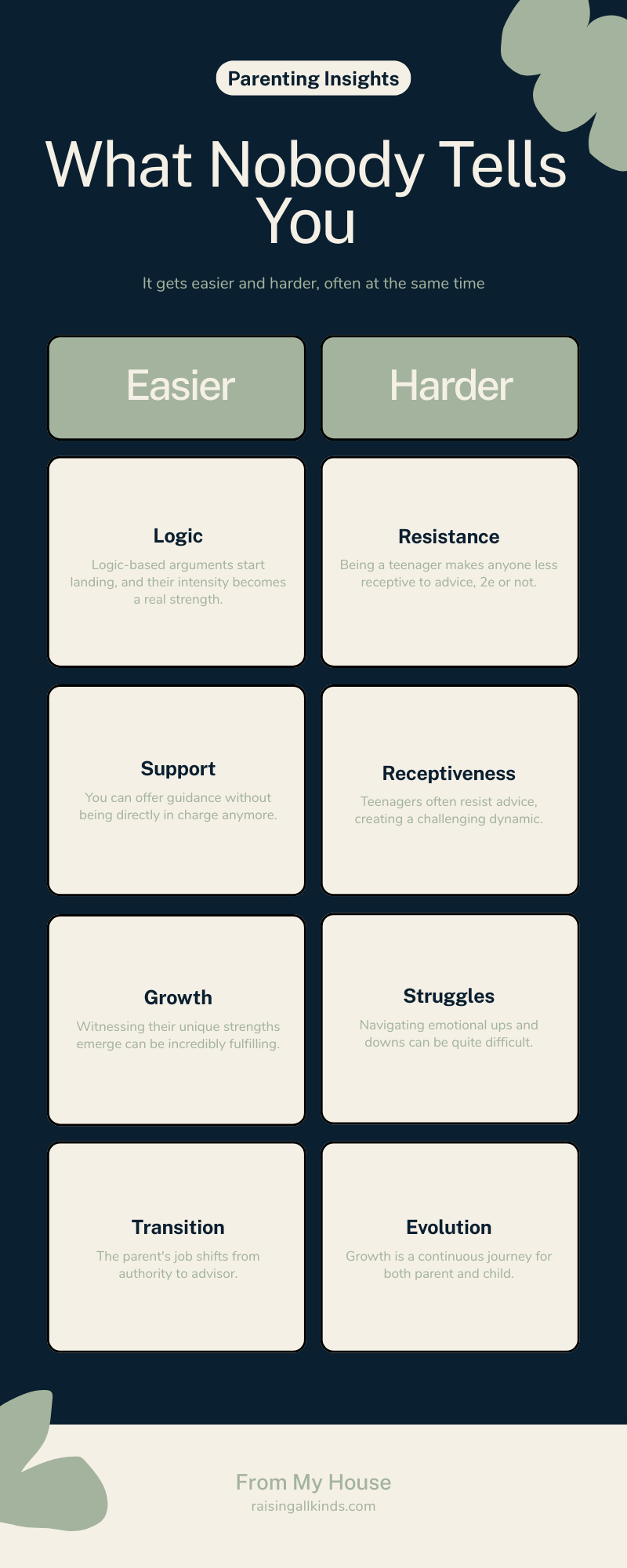
Here’s the part I wish someone had said out loud. It gets both easier and harder as they age, often at the same time. Easier, because their brains function better – logic-based arguments actually land, and that combination of a tactile, hands-on kid with a high IQ starts paying off in real ways: building furniture, figuring out how to fit all the camping gear in the car. Harder, because they’re teenagers, and being a teenager makes anyone less receptive to advice, suggestion, or direction, 2e or not.
The upside is bigger than people expect, though. If you lean into what neurodivergence gives a kid: the ability to research something obsessively, sustained interest that doesn’t fade, wildly creative ideas, real intelligence. The possibilities open up instead of narrowing. My oldest and I share real interests now, fantasy books especially, and that shared ground makes the harder conversations easier to have, because we’re not starting from nothing.
Two weekends ago we went to Ikea and my daughter got a bookshelf. He volunteered to build it, and then built it that same night, late, without being asked twice. Last winter we bought poster frames for the basement and he took the whole thing on himself: hung them, filled them, straightened every one. No chore in this house gets done that fast. The thing that makes homework take four hours is the same thing that makes an Ikea bookshelf take one evening.
My honest opinion, watching this play out over three kids at three different stages. As your kids get older, the parent’s job has to shift from authority to advisor. You arm them with information, you debate, you talk it through. And then you let them make their own decision. There’s an inverse relationship between how tightly a parent holds onto “you will do this my way” and how well that goes as the kid gets older. The harder you hang on, the more it costs the relationship, and a damaged relationship makes everything after that so much harder.
If I could say one thing to a parent just starting this process. Your kid is amazing. It’s okay that you don’t have all the answers yet. No single book or article is going to hand them to you. The trick is staying flexible and optimistic that the tools will come, over time, for both of you. Notice the smallest wins, and give yourself and your kid credit for them. At the end of the day, your relationship and your kid’s emotional well-being matter more than a missed assignment, a meltdown, or a room that didn’t get cleaned by noon on Saturday. Start small, build momentum, and notice the wins when they happen.
If you’re earlier in this process, here’s the identification timeline and what I wish I’d known sooner, and how advocating with schools changes at every age.
Names and identifying details in this post have been changed to protect my kids’ privacy. “Annie Hart” is a pen name for the same reason.