
A Back-to-School Checklist That Works for Any Kid
Back to school is a big transition for any kid, and a bigger one for a lot of neurodivergent kids – new teacher, new room, new schedule, all at once, usually with less warning than an adult would want for the same amount of change. You don’t need a diagnosis for any of this to be useful. It’s just what tends to help, regardless of why a particular kid needs the extra structure.
Two to three weeks before school starts
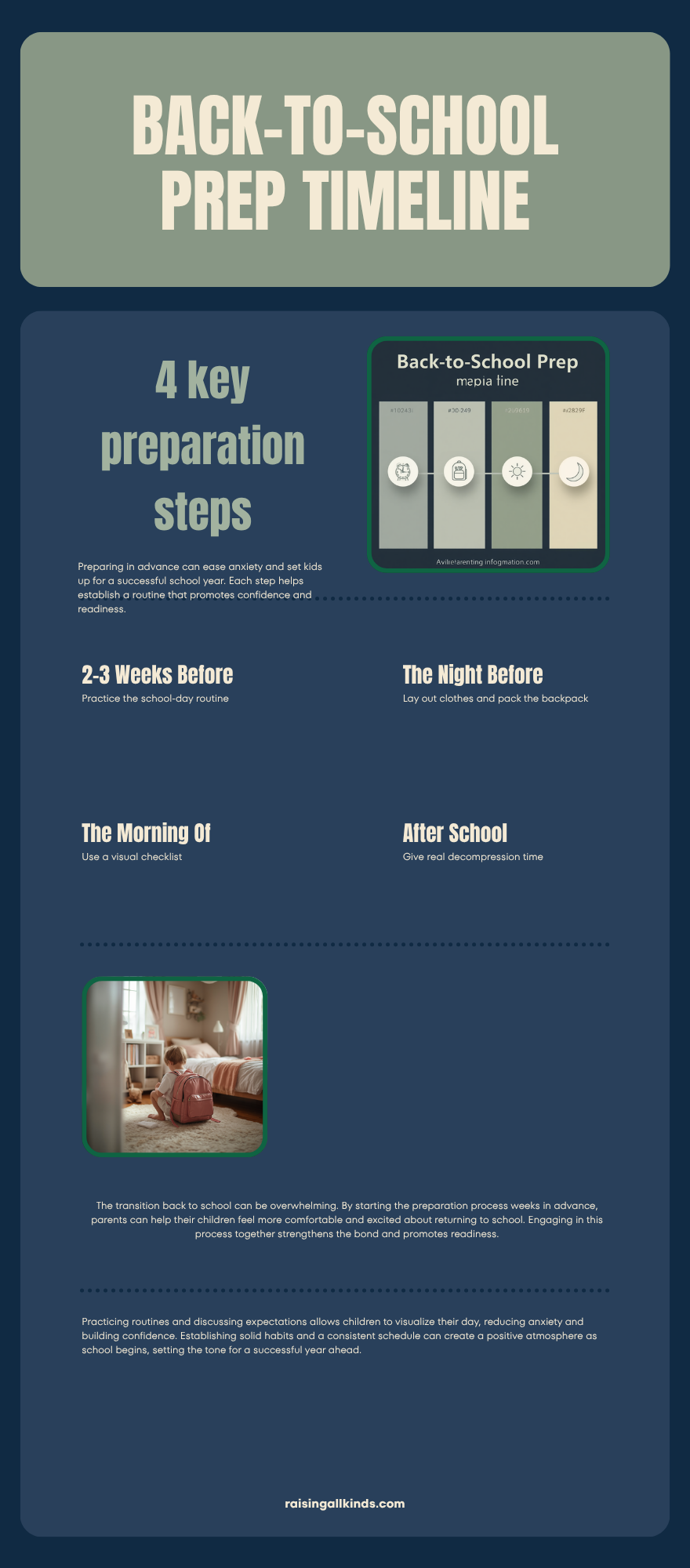
Start the school-day routine before school actually starts. If possible, have kids get up at the same wake-up time, and do the same morning steps, run as a dry rehearsal, so the first real school morning isn’t also the first time anyone’s tried waking up that early. If it’s a new school or a new building, a practice run of the actual drive or walk removes one unknown from a day that already has a lot of them.
The most important thing to do in the weeks running up to school starting is to talk about what’s coming, concretely, rather than in generalities. What the school day may look like, and coping techniques the kid is allowed to employ, if needed (such as fidget toys, ability to move to the back of the room to move around). If your kid is in elementary school or older, review the class lists so they know which of their friends are in their class. A visual countdown calendar works well for a lot of kids – crossing off days makes an abstract future event feel real and predictable instead of vague and looming. For a kid who does better with rehearsal than surprise, a short social story or a role-play of a tricky moment (the first goodbye at drop-off, finding the right classroom) can take some of the edge off.
If your child has an IEP or 504 plan, this is also the window to touch base with the school. Confirm the plan is current, confirm it’s been shared with the new teacher, and flag anything that changed over the summer before day one, not after something’s already gone wrong. (More on how these conversations with teachers shift as a 2e kid gets older.) Talk to your kid about the plan and what’s in place for them, because there is bound to be instructions from the teacher that conflict, and your kid deserves to know ahead of time what applies to them. For example, if the IEP states that an ADHD kid can get out of their desk and move to the back of the room at any time, and then the teacher says on the first day of school that to go to the bathroom, kids need to raise their hand and get permission, this could stress your kid out, because they could worry it applies to them moving to the back of the room.
The night before
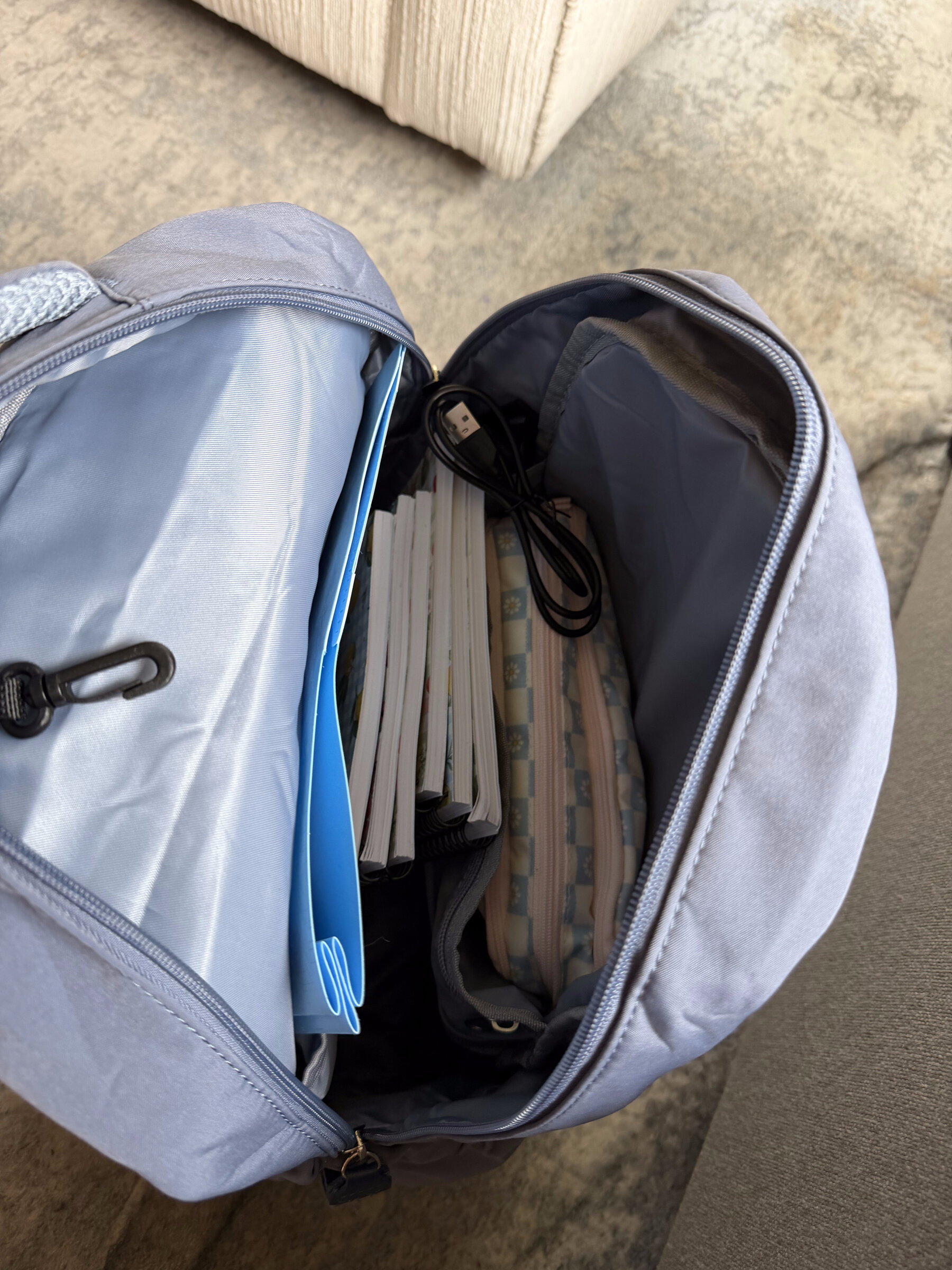
Lay out clothes. Pack the backpack and the lunch together, so nothing’s a surprise in the morning. Set shoes by the door. Agree out loud on what time everyone’s waking up, the same way you’d confirm plans with an adult. Kids do better with a heads-up than a surprise, even for something as small as tomorrow’s wake-up time.
The morning of
A consistent visual or verbal checklist matters here for the same reason it matters on any other morning. See our age-by-age checklist post if you want ideas on format, especially since the first weeks of school are exactly when a new checklist is worth testing, while everyone’s already paying closer attention to the routine than usual. Build in more buffer time than you think you need for the first week or two. A routine that’s technically fast enough on paper often isn’t fast enough yet in practice, until it has had time to become automatic. A consistent goodbye at drop-off (same words, same length, every day) gives an anxious kid something predictable to hold onto in an otherwise unpredictable moment.
After school
A lot of neurodivergent kids spend the whole school day holding it together, and need real decompression time before anything else gets asked of them: homework, activities, or even a debrief about how the day went. A change out of school clothes, a snack, and a low-demand activity before anything else is asked of them isn’t indulgent, it’s the difference between a kid who can engage with homework in twenty minutes and one who can’t engage with anything for the rest of the night.
If sensory tools help your kid (fidgets, noise-reducing headphones, a designated quiet space) this is a good time to make sure the school knows those exist and knows where your kid is allowed to use them, rather than finding out mid-October that nobody at school knew it was an option. A simple inbox/outbox system at home also helps catch permission slips and school papers before they get lost in a backpack.
Names and identifying details in this post have been changed to protect my kids’ privacy. “Annie Hart” is a pen name for the same reason.