
Sensory Regulation Doesn't End at Thirteen
Most of what gets written about sensory meltdowns is aimed at toddlers, the shrieking-in-the-cereal-aisle kind. It doesn’t go away with age, though. It just changes shape.
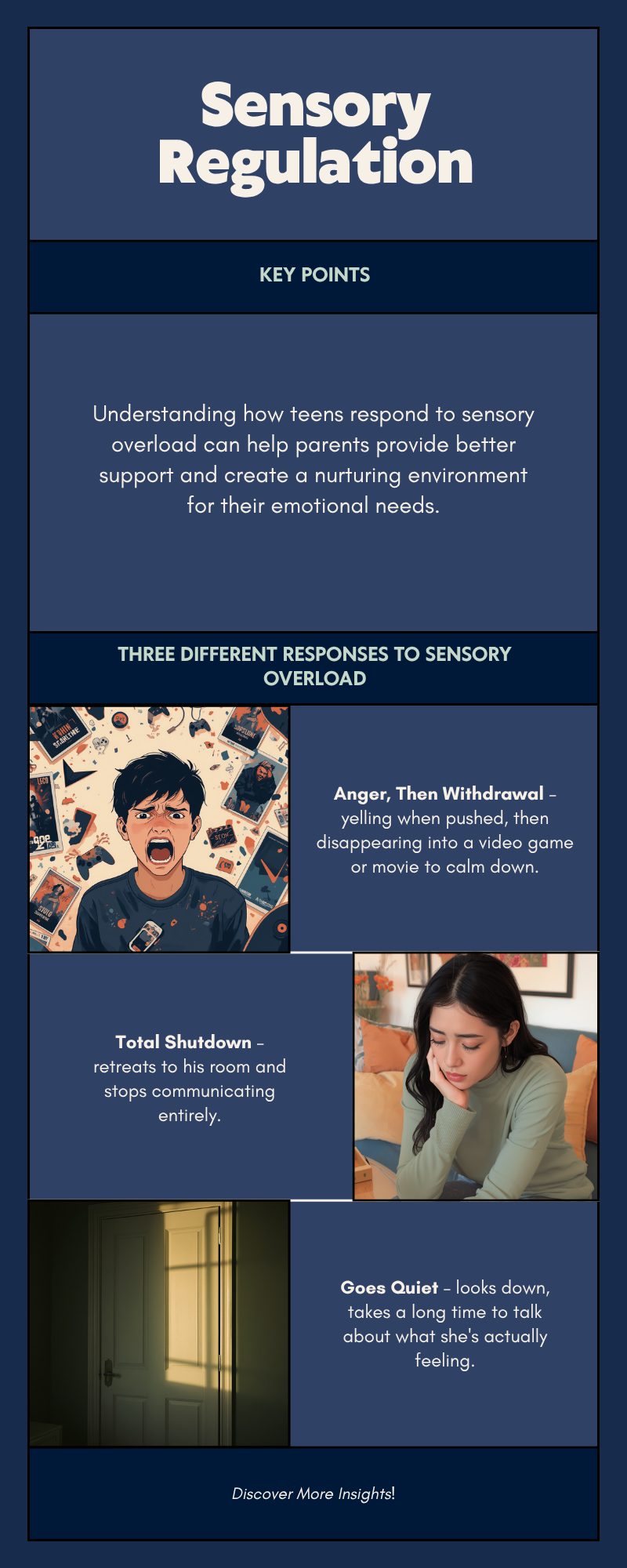
My oldest, eighteen now, still has what I’d genuinely call meltdowns – high levels of anger when he’s pushed, to the point of yelling. On a more ordinary hard day, he withdraws and dissociates to calm down: video games, a movie, YouTube, something he can disappear into. My middle kid, sixteen, is generally easygoing, but when he’s upset he withdraws to his room and shuts down communication entirely. My daughter, twelve, goes quiet and almost refuses to speak. She looks down, and it takes forever to get her to talk about what she’s actually feeling.
Three kids, three completely different responses to the same underlying thing. What works across all three is the same starting move: establish connection first. Sometimes that’s doing something together (a craft, a walk, a movie, anything) and sometimes it’s just talking. The goal is always the same two things: help them calm down, and help them feel safe enough to share what’s going on. When they’re struggling to put a feeling into words, I’ll put myself in their shoes and offer up a memory of a time I felt something similar, and what I did or felt. The younger they were, the more I leaned on distraction, but only after acknowledging the feeling first, not instead of it. If they’re not talking, I’ll often just say something like, “it seems like you’re feeling [x]. It’s okay to feel that,” and then hug them.
Not everything I’ve tried has worked. Once, on a friend’s suggestion, I threatened a 5- and 3-year-old with having to go to school in their pajamas if they weren’t ready on time. It backfired completely. They thought that sounded amazing, not humiliating. Kids don’t always feel embarrassed by the things we assume will embarrass them.
The thing that’s changed how the house operates didn’t happen overnight. About five years ago I read my way through Brene Brown, and then through a stack of books by therapists who work in Emotionally Focused Therapy. The second group is what changed how I parent. I stopped arguing about the problem in front of me and started handing the kid a narrative of what I thought they were feeling. Instead of “do your homework,” it became, “it seems like you may be feeling overwhelmed. Does that feel right to you?” It sounds small written down. It is not small in the moment. Alongside that: modeling my own feelings out loud instead of just reacting, and taking the time to reestablish connection before expecting anything to change. A recent example: the kitchen and living room were a disaster this week. Instead of yelling at everyone to clean it up immediately, I called all three into the kitchen and said, “I just worked all day, and came out of my office to find this.” I gestured at the counters. “I need you guys to spend ten minutes with me and get this cleaned up, please.” I told them, honestly, that the mess made me feel like there was one more task always waiting on my plate. And that they were all old enough to help with more than just putting food away: washing pots and pans, taking out the trash without being asked, wiping counters. It was a calm conversation. Four days later, the kitchen is still clean.
At this age it comes down to connection before correction, modeling the words I want them to use, and remembering that what doesn’t work at 3 can work completely differently at 13.
For a closer look at one specific way this shows up day to day, see why my ADHD son’s showers take forever. And for the longer view on parenting a 2e teenager generally, here’s what nobody really tells you.
Names and identifying details in this post have been changed to protect my kids’ privacy. “Annie Hart” is a pen name for the same reason.